
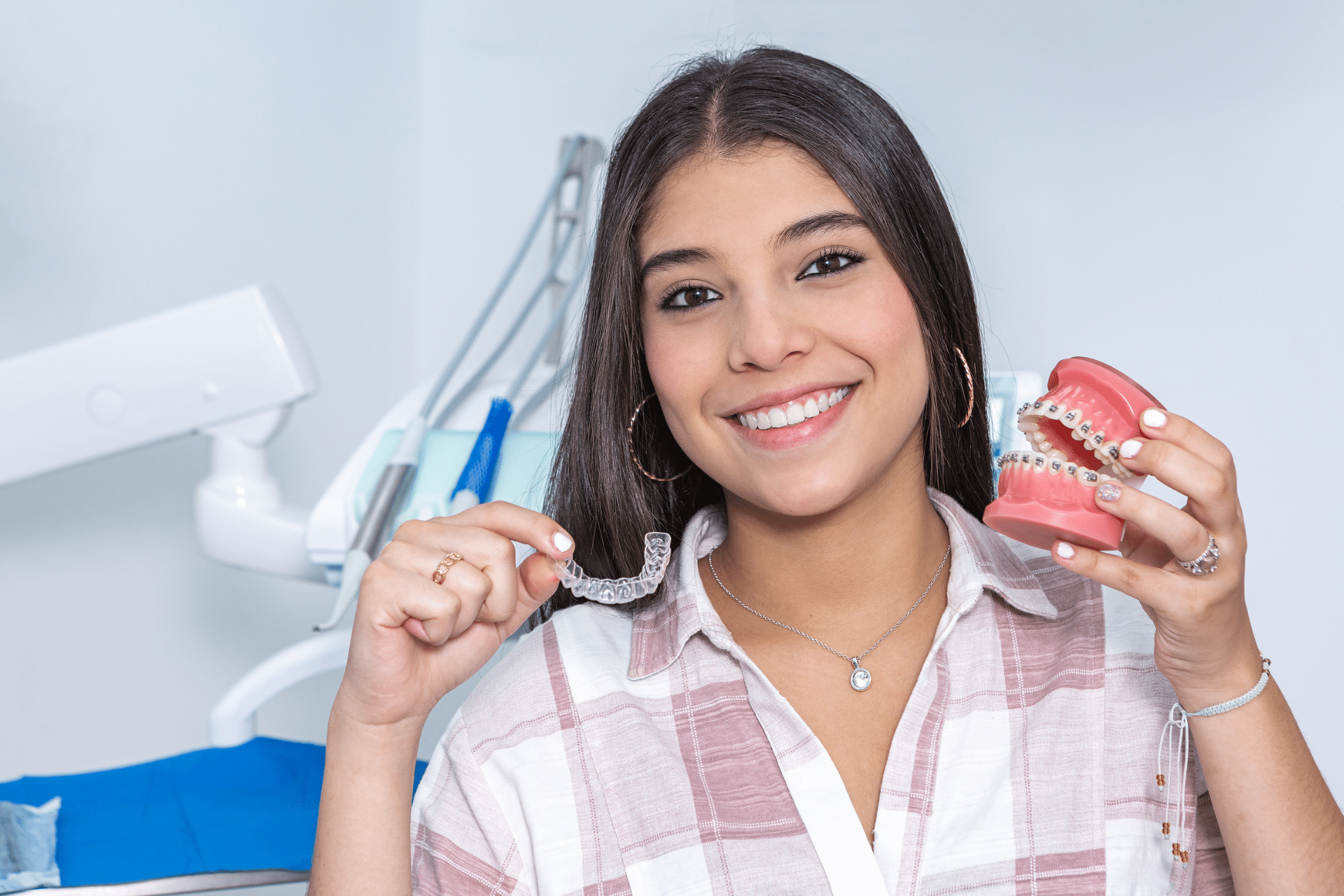
At Stone Oak Orthodontics, Dr. Robert “Ray” Caesar, Dr. Robert “Tito” Norris, and Dr. Maria Eduarda Duarte help families compare braces and Invisalign based on each teen’s treatment needs and lifestyle.
Why Does Daily Routine Matter When Choosing Braces or Invisalign?
Daily routine matters because orthodontic treatment continues between visits.
Braces stay attached to the teeth, so your teen does not have to remember to put them back in during the day. Invisalign uses removable aligners, which can offer more freedom but also require more daily care.
The first step is to find out which treatment can correct your teen’s tooth position and bite. If both options are suitable, daily habits can help your family decide which one may be easier to manage.
How Do Braces and Invisalign Fit Into School and Activities?
Both options can work with school, sports, clubs, and social events, but the day-to-day routine is different.
Braces stay in place during classes and activities, so there are no trays to track. Teens who play contact sports may need a mouthguard that protects both their teeth and braces.
Invisalign may appeal to teens who want a less noticeable option for school pictures, performances, presentations, or social events. The aligners are removable, so they also need to be kept in a safe case when taken out.
The American Association of Orthodontists explains in its comparison of braces and clear aligners that clear aligners are removable but generally need to be worn at least 22 hours each day.
How Do Eating and Oral Hygiene Differ With Each Option?
Braces and Invisalign require different habits for meals and cleaning.
With braces, teens need to stay away from foods that can damage brackets or wires, such as very hard, sticky, or chewy foods. They also need to brush carefully around the brackets and wires, while flossing may take more time or require special tools.
Invisalign aligners are removed before eating, so teens usually have fewer food limits during meals. After eating, they should clean their teeth before putting the trays back in.
Removable aligners can make normal brushing and flossing easier. Braces avoid the need to remove and replace trays, but cleaning around brackets and wires takes more attention.
How Much Responsibility Does Invisalign Require From a Teen?
Invisalign requires steady wear and careful handling of the aligners.
Teens need to wear the trays as directed, remove them for meals, keep them in a safe place, and put them back in afterward. Losing an aligner or leaving it out too long may slow progress.
Braces also require good habits. Teens still need to brush, floss, follow food rules, and take care of their braces. The main difference is that there is no removable tray to remember.
Parents can think about how well their teen already handles school items, personal belongings, and daily tasks. These habits can help show whether removable treatment may be a practical choice.
How Do Treatment Time, Comfort, and Cost Compare?
Treatment time, comfort, and cost can vary from one teen to another. Neither option is always better in all three areas.
Both braces and Invisalign can cause short-term tooth soreness as teeth move. Brackets and wires may rub the cheeks or lips at first. A new Invisalign tray may also feel tight for a short time.
Treatment length depends on your teen’s bite, tooth position, and the amount of movement needed. With Invisalign, wearing the aligners as directed also matters.
Cost depends on the treatment plan and the care your teen needs. Insurance and payment options may also affect what your family pays. A personal treatment estimate is more useful than assuming one option will always cost less.
Ready to Find the Right Treatment for Your Teen’s Smile?
Choosing between braces and Invisalign starts with an orthodontic exam. The orthodontist can check your teen’s teeth and bite and explain which options can meet their needs. Your family can then compare appearance, school routines, meals, cleaning, and daily care.
If your family is considering teen orthodontic treatment in San Antonio, TX, schedule a consultation with Stone Oak Orthodontics. Dr. Caesar, Dr. Norris, or Dr. Duarte can evaluate your teen’s teeth and bite, explain the available options, and help you make an informed treatment choice.